Solana's 11 Startup Ideas: Where Builders Should Look Next
Solana published 11 startup ideas on November 9, from housing futures to AI inference and stablecoin payments. Here is what each one targets, which have real demand, and how to test one fast.

Not financial advice. Solsmint publishes educational content about crypto assets. Prices are volatile, and nothing here is a recommendation to buy, sell, or invest. Verify every contract, authority, and fee yourself before you transact.
Last updated: November 11, 2026
Solana published 11 startup ideas on November 9, and the document reads less like a pitch deck and more like a list of things the network still cannot do well enough. The ideas came from people inside the ecosystem, including co-founder Anatoly Yakovenko, and each one points at a specific gap: housing futures, perpetual futures, AI inference, stablecoin payments, collectibles, consumer credit, attention markets, prediction markets, and security tooling.
That framing matters. Solana is not short of throughput, cheap fees, or token tooling. It is short of products that someone uses twice. The Builder Program is trying to close that distance, which is why the list is worth reading even if you never apply for support.
Below is what Solana actually published, who proposed each idea, which concepts already have demand behind them, and how a small team can test one without losing a year.
This article is for informational purposes only and is not financial, legal, or investment advice. Not financial advice. DYOR.
Key takeaways
- Solana's Builder Program published 11 startup ideas on November 9, 2026, each tied to a named ecosystem contributor.
- The list leans toward market structure and payments, not another token launchpad.
- Grants help, but distribution decides; the ideas are public, so speed is the only real moat.
- Most of these concepts need users before they need a token.
- The cheapest ideas can be tested in weeks, not quarters.
What Solana actually published
The post is a request for startups, not a funding announcement. Solana asked people across the ecosystem a simple question: what would you build if the network's speed and cost were not a constraint? The answers were collected into a public list, each entry paired with the person who proposed it and a short description of the problem.
Builders who want to pursue one can apply through the Builder Program for grants, technical support, and introductions. There is no prize for picking the idea that sounds most impressive. The useful signal is where experienced operators think attention is underpriced.
The 11 ideas at a glance
| Idea | Proposed by | The gap it targets |
|---|---|---|
| Housing futures | Matty Taylor | Hedging home prices without buying a house |
| On-chain perpetuals | Anatoly Yakovenko | Deeper, faster perps than offshore venues |
| Startup tokens | Adam Bergeman | Financing early companies on-chain, with research |
| AI inference marketplace | Jacob Creech | Paying for compute per request instead of per contract |
| Wallet advisor | Rishin Sharma | Turning wallet data into guidance people trust |
| Security tooling | Robert Chen | Stopping drains before they happen |
| Stablecoin payments | Nemil Dalal | Making digital dollars usable at checkout |
| Tokenized collectibles | Vibhu Norby | Physical goods with verifiable provenance |
| Consumer finance | Pedro Miranda | Credit and savings for people outside the bank |
| Attention tokens | Farhaj Mayan | Pricing attention without farming it |
| Prediction markets | Kyle Samani | Liquid, honest odds on real events |
Three clusters inside the list
Read together, the ideas fall into three groups. Each group has a different customer, a different sales cycle, and a different reason to exist on Solana rather than somewhere else.
Market structure: perps, housing futures, prediction markets
These are trading venues and hedging tools. They need liquidity, credible risk engines, and regulatory clarity. The reason they belong on Solana is mechanical: order books, funding payments, and settlement all benefit from sub-second confirmation. Yakovenko's perp idea is the most competitive item on the list, because perp DEXs already exist and the fight is over execution quality rather than novelty.
Housing futures are stranger and more interesting. A liquid market for home-price exposure would let ordinary owners hedge the largest asset on their balance sheet, a function that barely exists outside niche derivatives. The hard part is not the smart contract. It is the index, the oracle, and convincing anyone to take the other side.
Machine economy: AI inference and security
Jacob Creech's inference marketplace and Robert Chen's security tooling both assume software will be the main user of blockchains. That means payments need to settle per request, per token, per API call, at a size where a card fee is absurd. Solana's fee structure makes micro-settlement viable, and the machine-native economy is already forming around it.
Security is the unglamorous half of the same thesis. If agents hold funds, a drain is not just embarrassing, it is a systemic event. Tooling that flags malicious approvals and simulates transactions before signing has a clear buyer: every wallet team on the network.
Consumer and culture: collectibles, attention, wallet advice
The third cluster is about turning on-chain data into something a normal person wants. Vibhu Norby's collectibles idea connects physical items to verifiable records, which is a provenance business more than a speculation business. Farhaj Mayan's attention tokens try to price what social platforms give away, and every previous attempt in that category has failed for the same reason: attention is easy to mint and hard to make valuable.
Rishin Sharma's wallet advisor sits closest to mass adoption. Most people hold assets they do not understand and cannot price. A tool that reads a wallet and explains, in plain language, what the positions mean and where the risk sits would be used far more often than a new DEX.
Why payments keep showing up
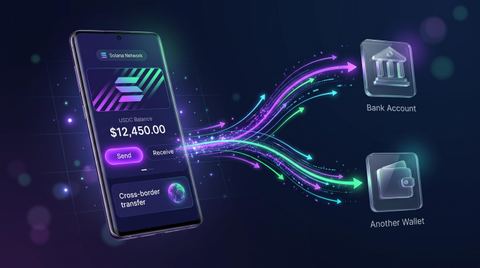
Nemil Dalal's stablecoin payments entry is the least surprising item on the list and probably the most consequential. Solana already settles USDC for banks, card programs, and wallets, and consumer card spending funded by stablecoins on the network hit a record $141 million in October. The infrastructure exists. What is missing is the last mile: invoicing, reconciliation, refunds, and the operational software a merchant actually needs.
That is a software problem wearing a crypto costume, which makes it a good fit for a small team. You do not need a protocol breakthrough. You need to make one specific payment flow boring and reliable.
What the Builder Program does and does not give you
Program support typically includes grant capital, engineering access, and introductions to teams that can become design partners. What it does not give you is demand. A grant funds the first six months; it does not create a reason for the second six.
Treat any support as runway, not validation. The strongest applications describe a narrow user, a measurable behaviour, and a reason the product must live on-chain. Vague ambition is the most common reason good teams get passed over.
The part nobody wants to hear: ideas are not moats
Every idea on this list is now public. Someone in another timezone read the same post and started building this morning. That is fine, because the list was never the asset. The asset is the specific insight about which user hurts most and how much they would pay to stop hurting.
Two teams can pick prediction markets and end up in completely different businesses. One builds a general venue and competes with established players. The other builds settlement infrastructure for a single regulated market and quietly becomes necessary. The second is usually the better company.
How to test one of these ideas in 30 days
- Pick one user, not one market. "A landlord in Lagos who collects rent in USDC" beats "consumers who want payments."
- Write the workflow on paper, including the parts that happen off-chain. Most failures hide in reconciliation, not contracts.
- Build the smallest on-chain piece that proves the claim. Often that is a single program and a single instruction.
- Run it with five real users and watch where they hesitate. Hesitation is data.
- Decide whether a token helps. If it does not improve distribution, it adds regulatory surface for nothing.
Where a token actually fits
Some of these ideas genuinely need a token: a market that needs a settlement asset, a network that needs to pay contributors, a venue that needs liquidity incentives. Others do not, and bolting one on is the fastest way to lose serious users.
If a token is part of the design, launch it deliberately. Use the Solana token creator to issue the SPL token, then follow the beginner's guide to token creation before you touch liquidity. The technical launch takes minutes; the supply and governance decisions take longer and matter more.
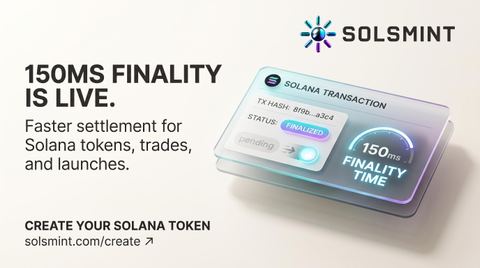
Speed is the other reason builders stay on Solana. The Alpenglow upgrade is pushing finality toward 150 milliseconds, which changes what a payments product can assume about confirmation. Builders who design for near-instant finality today will have a head start when it lands.
What we still don't know
The request for startups does not list grant sizes, review timelines, or how many teams will be supported. It also does not rank the ideas, so the order in the post should not be read as a priority list.
Two details are worth watching. First, whether Solana publishes follow-up data on which ideas actually received funding. Second, whether the program favours teams that already have traction, which would make it less useful for first-time builders than the framing suggests.
FAQ: Solana startup ideas
Are these official Solana products? No. They are ideas published through the Builder Program, with support available to teams that choose to pursue them.
Do I need a grant to start? No. Grants are useful runway, but several of these ideas can be tested with a weekend of work and five conversations.
Which idea is easiest for a solo builder? Wallet advice, security tooling, and payments tooling. All three are software problems with clear users, and none require deep liquidity on day one.
Which idea is hardest? Perpetuals and prediction markets. Both are liquidity businesses with heavy compliance and risk-management burdens.
Should I launch a token for my startup? Only if the token does work the product cannot do otherwise. Start with the no-code token creator if you need one, and be honest about what it is for.
Where can I read the original list? Solana published it at solana.com/request-for-startups on November 9, 2026.
Bottom line on Solana's startup list
The list is a useful map of where the network's raw capacity exceeds the products built on it. Payments, security, and wallet intelligence are the entries a small team can act on this month. Perps and prediction markets are bigger prizes with bigger incumbents.
None of it matters without a user who feels the problem. Pick one, narrow it until it sounds almost too small, and ship before the list gets crowded. If you need a token to make the model work, start with the Solana token creator and keep the supply simple enough to explain in one sentence.
Sources
- Solana, Request for Startups, published November 9, 2026: solana.com/request-for-startups
- crypto.news, "Solana publishes 11 startup ideas spanning AI and housing futures": crypto.news
- Solana documentation, tokens and the SPL standard: solana.com/docs/core/tokens
- TokenPost, "Solana Stablecoin Card Spending Sets October Record at $141 Million," November 10, 2026: tokenpost.com
Disclaimer: This article is for information and education only and is not financial, investment, or tax advice. Crypto assets are volatile and you can lose money. Always verify token authorities and contract details yourself before interacting with any asset.
Ready to create your own token?
Launch an SPL token on Solana in minutes. No code, 0.05 SOL total, metadata and authorities handled for you.