
AI Agents and Stablecoins: The Rise of the Machine-Native Economy
AI agents may soon pay for data, computing, and digital services with stablecoins. Learn how agentic commerce could reshape crypto payments.

admin
Author
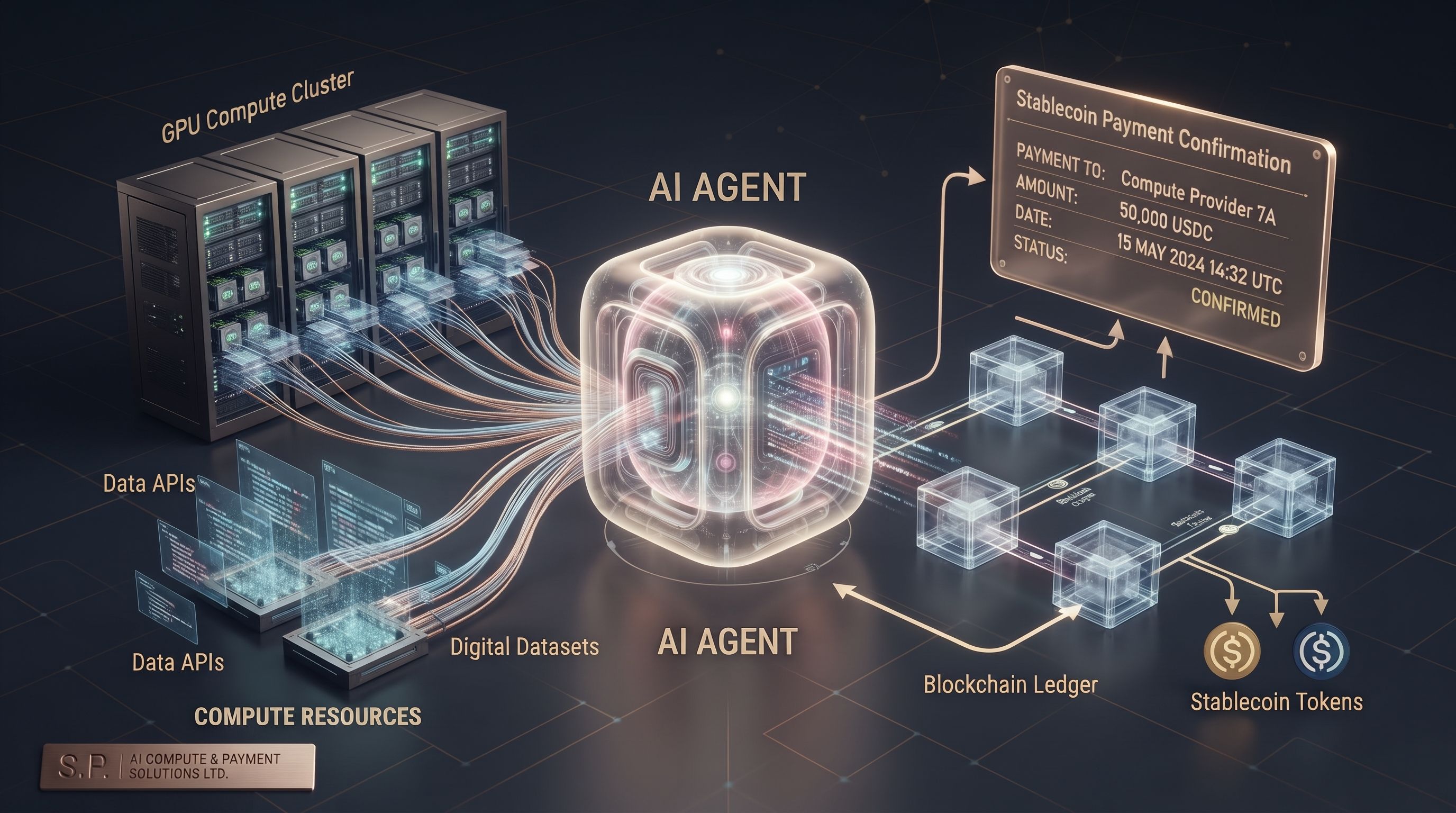
Artificial intelligence agents may soon do more than generate content, answer questions, or automate workflows. They could also purchase the resources needed to complete those tasks.
That may include buying computing power, accessing private datasets, paying for API requests, purchasing model inference, or hiring another digital service. According to analysis discussed in a BlackRock paper, stablecoins and blockchain networks could provide the payment and settlement infrastructure for this emerging machine-native economy.
The concept is simple: an AI agent makes a decision, identifies a service, checks the price, sends payment, and receives the result without requiring a person to approve every individual transaction.
This article explains how AI agents and stablecoins could work together, why blockchain-based payments may be useful for machines, how protocols such as x402 support agentic commerce, and what this trend could mean for token creators and Web3 builders.
Disclaimer: This article is for informational purposes only. It does not constitute financial, investment, legal, or technical advice. Stablecoins, digital assets, AI systems, and automated payments carry operational, financial, security, and regulatory risks.
Quick Answer
How could AI agents use stablecoins?
AI agents could use stablecoins to pay automatically for digital services such as API calls, data access, model inference, software tools, and computing resources. Blockchain networks can provide programmable, always-on settlement, while stablecoins offer a digital asset designed to maintain a relatively stable value.
The technology is still developing. Automated payments require secure wallets, spending limits, identity systems, reliable service providers, and strong protections against fraud and software errors.
What Is a Machine-Native Economy?
A machine-native economy is an economic system designed for software agents and automated systems rather than only human users.
Traditional online commerce is built around people:
-
A user visits a website.
-
The user creates an account.
-
The user adds a payment method.
-
The user reviews the purchase.
-
The user clicks a confirmation button.
-
The service is delivered.
AI agents may need a faster and more automated process. An agent could need thousands of small services while completing a task. Waiting for human approval each time would reduce the value of automation.
A machine-native payment system could allow an agent to:
-
Discover a service.
-
Read the price.
-
Evaluate the provider.
-
Authorize a small payment.
-
Receive the requested resource.
-
Record the transaction.
-
Continue its task.
This model is sometimes described as agentic commerce or machine-to-machine payments.
Why Stablecoins Matter
Stablecoins are digital tokens designed to track the value of an underlying currency or asset, usually the U.S. dollar.
Their relative price stability makes them more practical for payments than highly volatile assets. An AI agent that pays for a data request needs to know whether the amount will retain approximately the same value between authorization and settlement.
Stablecoins may help AI systems with:
-
Predictable pricing.
-
Small digital payments.
-
Global settlement.
-
Automated transfers.
-
Programmable spending rules.
-
Continuous availability.
-
Machine-readable transaction records.
For example, an AI research agent could pay a few cents for a market-data request. It could then pay another provider for computing power and a separate service for data verification.
The agent would not need to use a conventional checkout page for every request.
How AI Agents Could Pay for Computing and Data
An AI agent needs resources to complete tasks. Those resources can include:
-
Cloud computing.
-
GPU capacity.
-
Model inference.
-
Storage.
-
Data feeds.
-
Search APIs.
-
Identity verification.
-
Translation services.
-
Software tools.
-
Blockchain transaction services.
A future payment flow could work like this:
-
The AI agent identifies a required service.
-
The service provider returns pricing and payment instructions.
-
The agent checks its budget and permissions.
-
The agent signs a stablecoin payment.
-
The payment is verified on-chain.
-
The provider delivers the data or computing resource.
-
The agent records the outcome and continues working.
This is different from a human purchasing a monthly subscription. The machine may pay only for the exact amount of service it uses.
What Is x402?
x402 is an open payment protocol built around the HTTP 402 “Payment Required” status code.
In a typical x402 flow:
-
An agent requests a paid API or online resource.
-
The server returns an HTTP 402 response with payment requirements.
-
The agent reviews the amount and conditions.
-
The agent signs a stablecoin payment.
-
The request is sent again with payment information.
-
A facilitator verifies and settles the payment.
-
The server provides the requested resource.
The system is designed to let machines pay for online services without requiring traditional accounts, API keys, checkout pages, or manual approval for every request.
Coinbase introduced x402 as a payment standard for machine-to-machine transactions. The protocol can support payments for API calls, datasets, model access, and other digital resources.
Why Blockchain May Suit Agentic Payments
Blockchain networks offer several properties that may be useful for autonomous software.
Programmable transactions
Payments can be triggered by predefined rules, permissions, or service conditions.
Global availability
Public blockchains can operate around the clock without depending on traditional banking hours.
Transparent settlement
Transactions can be verified through public ledgers, depending on the network and asset.
Small payments
Some blockchain networks can support low-value transfers more efficiently than traditional payment systems.
Machine-readable infrastructure
Wallets, tokens, smart contracts, and APIs can interact programmatically.
Digital ownership
Blockchain-based systems can represent balances, access rights, credentials, and other digital claims.
These benefits do not mean blockchain is automatically the best option for every AI payment. Traditional payment networks continue to evolve, and businesses may use a combination of systems.
The Role of Stablecoins in Agentic Commerce
BlackRock’s analysis suggests stablecoins may become the first major digital-asset category used for machine-native transactions because they provide a relatively stable unit of account.
That makes them useful for services priced in small amounts.
Possible examples include:
-
Paying $0.01 for a single API request.
-
Paying $0.20 for a short model inference.
-
Paying $2 for a verified dataset.
-
Paying $5 for temporary GPU capacity.
-
Paying a small fee to access a premium software tool.
The agent does not necessarily need to buy a volatile cryptocurrency and convert it before every transaction. It can maintain a stablecoin balance and spend according to programmed policies.
AI Agents May Need Their Own Wallets
For autonomous payments to work, an AI agent needs access to a wallet or payment account.
That wallet should not provide unlimited control. It may use:
-
Daily spending limits.
-
Per-transaction caps.
-
Approved provider lists.
-
Time-based permissions.
-
Human escalation rules.
-
Separate balances for different tasks.
-
Automated monitoring.
-
Emergency freeze controls.
A company might give an AI research agent a wallet with a $100 daily limit. The agent could pay for data and computing services but could not transfer the entire company treasury.
This type of restricted wallet is important because AI systems can make mistakes, misunderstand instructions, or be manipulated by malicious inputs.
Security Risks
Agentic payments introduce new security risks that do not exist in ordinary human checkout flows.
Prompt injection
An attacker may manipulate an agent’s input and convince it to request an unsafe service or send funds to an unauthorized address.
Malicious providers
A dishonest service provider may deliver low-quality data, overcharge the agent, or attempt to exploit payment logic.
Wallet compromise
If an AI agent’s wallet keys or permissions are compromised, an attacker may make unauthorized transactions.
Spending loops
A poorly designed agent could repeatedly call services, creating unexpected costs.
Fake data and services
Agents may not reliably distinguish legitimate providers from malicious or inaccurate ones.
Smart-contract vulnerabilities
Automated payment protocols may rely on smart contracts, facilitators, bridges, or other infrastructure that can contain security flaws.
Lack of human judgment
An agent may follow its rules correctly while still producing a harmful result because the rules were incomplete.
How to Build Safer Agentic Payments
A responsible architecture should include multiple safeguards.
-
Set strict spending limits.
-
Use separate wallets for separate tasks.
-
Require human approval above a threshold.
-
Maintain provider allowlists.
-
Verify service identities.
-
Use transaction simulation.
-
Monitor payment activity in real time.
-
Keep emergency pause controls.
-
Record every request and response.
-
Review smart contracts before integration.
-
Use rate limits to prevent repeated calls.
-
Test agents in a sandbox before mainnet deployment.
Security should be designed into the system from the beginning. It should not be added after autonomous payments are already live.
AI Agents and Crypto Adoption
AI could expand crypto usage by creating new users that are not people.
A human may make several crypto payments per week. An AI agent could make thousands of small payments while completing tasks for its owner.
That could create demand for:
-
Stablecoins.
-
Low-cost blockchains.
-
Fast settlement networks.
-
Programmable wallets.
-
Tokenized access rights.
-
Machine identity systems.
-
Payment APIs.
-
On-chain reputation.
This is one reason the intersection of AI and digital assets has attracted attention from large financial institutions and technology companies.
However, adoption should be measured carefully. A protocol may process a large number of settlements without all of them representing genuine autonomous AI commerce.
Current Evidence Requires Caution
The agentic economy is promising, but it is still early.
A TRM Labs analysis of x402 activity reportedly estimated that only approximately 0.6% to 7.5% of analyzed settlement value appeared likely to originate from AI agents, depending on the methodology used.
This does not disprove the technology. It shows that current payment activity should not automatically be described as large-scale autonomous commerce.
There is an important difference between:
-
A protocol being capable of AI payments.
-
Developers testing AI payment systems.
-
Human-operated bots using payment infrastructure.
-
Fully autonomous agents making economically meaningful decisions.
The technology may grow, but claims should distinguish current usage from future potential.
What This Means for Web3 Builders
The rise of AI agents creates opportunities for developers and crypto founders.
Agent-native tokens
Projects may create tokens used for access, incentives, data permissions, or service payments.
AI service marketplaces
Agents could discover and pay providers through open marketplaces.
Data monetization
Data owners may charge agents per request instead of selling access through large subscriptions.
Compute marketplaces
GPU owners and cloud providers could sell spare capacity to autonomous buyers.
Reputation systems
Blockchains may record provider performance, payment history, and service reliability.
Automated DeFi operations
Agents could rebalance portfolios, monitor markets, or execute predefined strategies within strict limits.
These use cases require more than a token. They need reliable products, secure infrastructure, clear permissions, and useful services.
How Token Creators Can Prepare
If you are building a token for an AI or Web3 project, define its function before choosing supply or branding.
Ask:
-
What does the token allow users or agents to do?
-
Who receives the initial supply?
-
Can new tokens be minted?
-
Can tokens be burned?
-
What controls does the owner retain?
-
Will the token be used for payments or access?
-
How will users verify official contracts?
-
What happens if the service shuts down?
-
How will treasury funds be protected?
-
What legal and compliance requirements may apply?
Avoid describing a token as “AI-powered” without explaining its actual role.
A token that merely uses an AI-themed name is not necessarily connected to AI infrastructure. Clear utility is more valuable than a trend-based label.
Create Your Solana Token with Solsmint.com
If you want to create a token for a Solana-based AI, Web3, gaming, community, or memecoin project, Solsmint.com provides a simple no-code workflow.
Solsmint specializes in Solana token creation and can help users create SPL tokens without building the entire token process manually.
How to create a token with Solsmint
-
Visit Solsmint.com.
-
Connect a compatible Solana wallet.
-
Enter the token name and symbol.
-
Set the total supply and decimals.
-
Review available mint, burn, and management settings.
-
Confirm the token configuration.
-
Approve the wallet transaction.
-
Save the token mint address.
-
Distribute the token or add liquidity if appropriate.
You can use the token for a community, AI application, reward system, digital service, or Solana memecoin project.
Token creation is available for approximately 0.05 SOL, but users should verify the current fee and available features on the official website before completing a transaction.
Creating a token is only the first step. Before launch, prepare clear documentation, transparent tokenomics, secure wallet controls, and a realistic explanation of what the project does.
Frequently Asked Questions
What are AI agent payments?
AI agent payments are transactions initiated by autonomous software to purchase data, computing, APIs, digital tools, or other services.
Why would AI agents use stablecoins?
Stablecoins can provide relatively predictable pricing, programmable transfers, and blockchain-based settlement for machine-to-machine payments.
What is agentic commerce?
Agentic commerce is an online economic model in which AI agents discover, purchase, and exchange services with limited human intervention.
What is x402?
x402 is an HTTP-based payment protocol that uses the 402 “Payment Required” status to let online services request stablecoin payment before delivering a resource.
Can AI agents buy computing power?
In theory, yes. An agent could identify available computing capacity, compare prices, authorize a payment, and receive access to the required resources.
Can AI agents pay for data?
Yes. A data provider could charge an agent per request, dataset, or API call using an automated payment system.
Are AI agents already making most crypto payments?
No. Current evidence suggests that a relatively small share of analyzed x402 settlement activity may come from genuine AI agents, depending on the classification method.
Is it safe to give an AI agent a crypto wallet?
It can be risky without strong controls. Use spending limits, approved addresses, transaction monitoring, separate wallets, and human approval for large or unusual payments.
How much does it cost to create a Solana token?
Solsmint token creation is available for approximately 0.05 SOL. Fees and platform features can change, so verify the current details at Solsmint.com before deployment.
Conclusion
AI agents may become active participants in the digital economy. Instead of waiting for humans to approve every purchase, they could pay for computing power, data, API calls, and software services automatically.
BlackRock’s analysis highlights the potential relationship between AI’s machine-native intelligence and blockchain’s programmable settlement infrastructure. Stablecoins may be especially useful because they can provide a relatively stable unit of account for frequent, low-value machine payments.coindesk+1
The opportunity is significant, but the technology is still developing. Autonomous payments require secure wallets, spending controls, reliable providers, identity systems, and clear accountability.
If you are building a Solana-based AI, Web3, or community project, create your token with Solsmint.com for approximately 0.05 SOL. Always verify current fees, features, and security considerations before launching.
About admin
Crypto enthusiast and blockchain analyst with expertise in the Solana ecosystem. Passionate about educating others on the potential of decentralized technologies and DeFi innovations.