India’s Grain Finance Goes On-Chain: How Tokenized Agriculture Could Transform Lending
India’s agricultural finance sector could be entering a new digital era as warehouse receipt financing meets blockchain technology. Explore how tokenized agriculture, grain-backed loans, and real-world asset tokenization could transform agricultural lending.

admin
Author
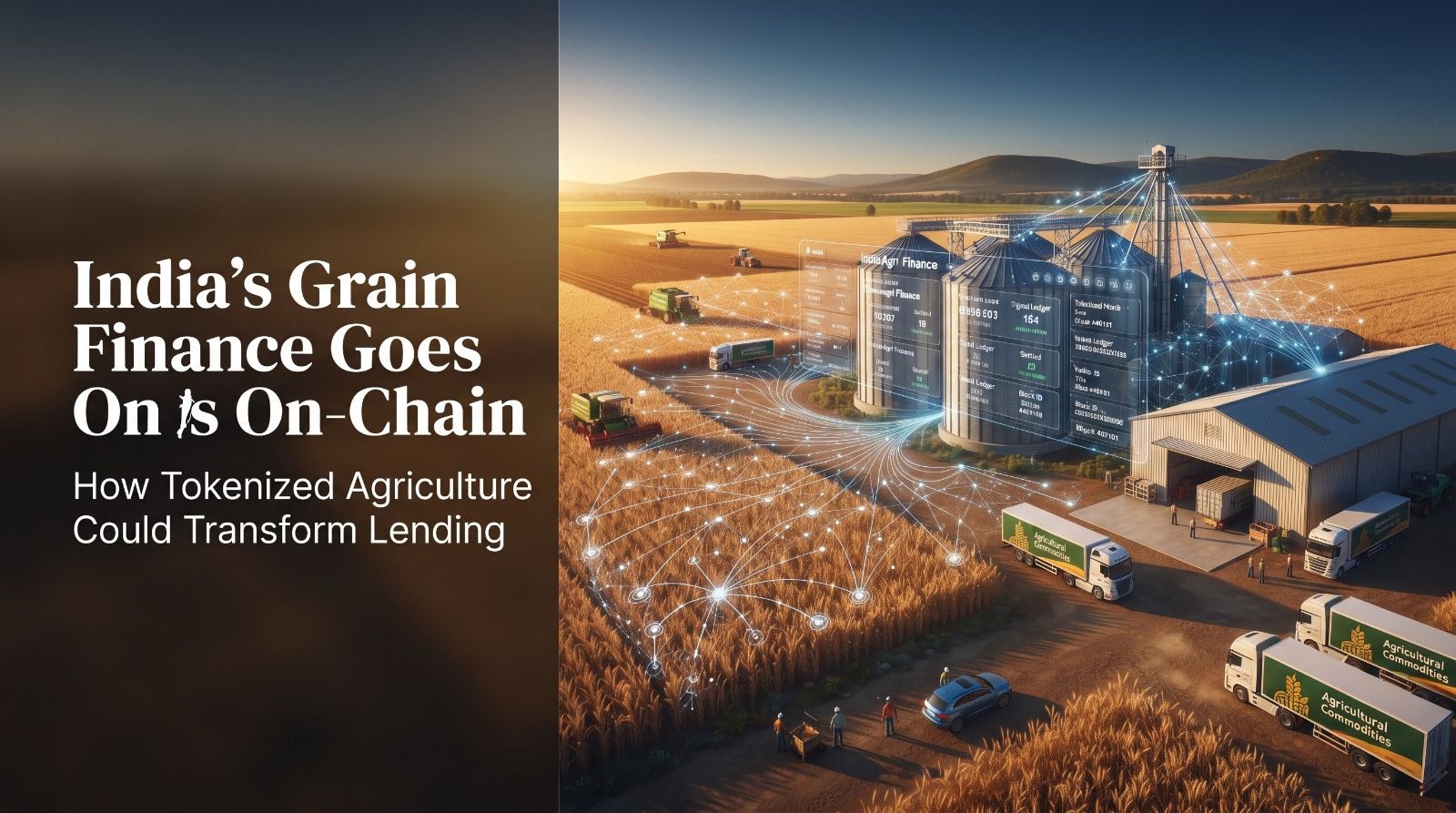
India’s agricultural finance sector is entering a new digital era as traditional grain financing begins to meet blockchain technology.
For years farmers traders and agricultural businesses have relied on warehouse receipt financing to access working capital. Stored grain can be used as collateral allowing businesses to secure financing without immediately selling their commodities.
Now this traditional model is attracting attention from the blockchain industry.
The concept of putting grain backed financing on-chain could create a new connection between India’s massive agricultural supply chain and the growing world of digital finance.
Why Grain Backed Loans Matter
Agriculture often creates a timing problem for farmers and commodity businesses.
A farmer may harvest grain today but receive a better price by selling it later. However waiting for the right market conditions can create a shortage of cash for daily operations.
Warehouse receipt financing offers a solution.
When agricultural commodities are stored in an approved warehouse their value can be used to support a loan. This allows the owner to access money while keeping the underlying grain in storage.
The concept itself is not new.
What is changing is the technology being used to manage these financial transactions.
From Warehouse Receipts to On Chain Finance
Traditional warehouse financing involves several participants.
These can include farmers warehouse operators banks commodity traders processors insurers and inspection companies.
All of these participants need accurate information about the underlying commodities.
They need to know how much grain is stored where it is located who owns it and whether it has already been used as collateral.
Managing this information through traditional systems can take time and create additional paperwork.
Blockchain technology could provide a shared digital record that makes this information easier to track.
Instead of depending entirely on separate databases and physical documents authorized participants could use a digital system to record ownership financing and transactions.
This is where tokenized agriculture becomes interesting.
A digital token can represent a claim or financial interest connected to an underlying real world asset.
In an agricultural financing system the digital representation could be connected to verified warehouse inventory or other legally recognized documentation.
The goal is not to make grain more valuable through blockchain.
The goal is to make the financial infrastructure surrounding that grain more efficient.
Why India Could Become a Major Market
India has one of the world’s largest agricultural economies.
Millions of farmers traders processors and businesses participate in the country’s agricultural supply chain every year.
The sector also handles enormous quantities of commodities that move through warehouses before reaching processors markets and consumers.
Because of this scale even relatively small improvements in agricultural financing could create a significant impact.
Digital financing systems could potentially make it easier for businesses to use stored commodities as collateral while improving visibility for lenders.
This could be particularly important for companies that need working capital but do not want to sell their inventory at unfavorable prices.
How Blockchain Could Improve Agricultural Lending
The biggest opportunity is not simply turning traditional loans into cryptocurrency transactions.
Instead blockchain could become part of the infrastructure that manages real world agricultural finance.
Greater Transparency
Blockchain based systems can create digital records that are easier to audit and track.
For lenders this could provide better visibility into the status of collateral and financing activity.
Faster Processing
Traditional financing can involve paperwork document verification and communication between multiple organizations.
Digital systems could automate some of these processes and potentially reduce the time required to process transactions.
Better Collateral Management
Collateral tracking is one of the most important parts of commodity backed lending.
A digital system could help lenders monitor inventory and financing records while reducing the possibility of duplicate claims.
Improved Access to Capital
If tokenized agricultural assets become widely accepted financial instruments they could potentially attract more sources of capital to the agricultural sector.
This could create new financing opportunities for farmers traders and commodity businesses.
The Bigger Story Behind Billions in Grain Financing
Large scale grain backed financing has attracted attention because of the enormous amount of capital involved.
However the bigger story is not just about a particular dollar figure.
The real development is the growing effort to digitize real world assets.
Agriculture has traditionally depended on physical infrastructure such as warehouses transportation systems inspection services and paper documentation.
Blockchain introduces a digital layer that could connect these physical assets with modern financial systems.
If this model develops successfully the movement of agricultural commodities and the movement of financial claims could become much more closely connected.
Is On Chain Agricultural Finance Really DeFi
Not necessarily.
Using blockchain does not automatically mean that a financial system is decentralized.
An agricultural financing platform can use blockchain technology while still relying on regulated banks verified warehouses financial institutions and centralized administrators.
In fact this type of hybrid model could be more practical for real world commodities.
Grain is a physical asset.
It must be stored inspected protected and verified.
Blockchain can help manage digital records but it cannot replace the physical infrastructure required to manage agricultural commodities.
The Rise of Real World Asset Tokenization
Agriculture is part of a much larger movement known as real world asset tokenization.
Financial companies are exploring ways to represent physical assets digitally.
These assets can include commodities invoices real estate and other forms of collateral.
Agricultural commodities could be particularly suitable for tokenization because they already have established markets valuation systems and financing structures.
The major challenge is making sure that the digital asset accurately represents the physical asset.
If a digital record represents a certain quantity of grain there must be a reliable system confirming that the grain actually exists and remains in approved storage.
Technology alone cannot guarantee this.
Strong regulations audits physical inspections and trusted warehouse operators are equally important.
What Could This Mean for Farmers
For farmers and agricultural businesses the potential benefit is simple.
Better access to working capital.
Instead of selling stored grain immediately because they need cash they may be able to use that inventory as collateral for financing.
This could give farmers more flexibility when deciding when to sell their commodities.
Traders and processors could also benefit from improved inventory financing.
However the real impact will depend on financing costs regulatory requirements and the reliability of the technology behind these systems.
Challenges That Still Need to Be Solved
The idea of on chain agricultural finance is promising but several challenges remain.
Regulation
Financial products connected to commodities can involve complex regulations.
Any large scale tokenization project must operate within the applicable financial lending and commodity rules.
Physical Verification
A blockchain can record information but it cannot physically verify the contents of a warehouse.
Reliable inspection and verification systems will therefore remain essential.
Commodity Price Changes
Grain prices can move significantly depending on supply demand weather and global market conditions.
Lenders must therefore use proper risk management and collateral requirements.
Technology Adoption
Farmers warehouses banks traders and processors may all use different systems.
Connecting these systems and creating a common digital infrastructure will require significant investment.
Legal Ownership
One of the most important issues is determining exactly what rights a digital asset represents.
For tokenized agricultural finance to become mainstream there must be a clear legal connection between the digital record and the underlying physical asset.
The Future of Tokenized Agriculture
India’s agricultural financing industry already has systems that allow stored commodities to support lending.
The next stage could involve making those systems more digital transparent and efficient.
This is why the combination of warehouse receipts blockchain technology and tokenized assets deserves serious attention.
The real innovation is not simply putting grain on a blockchain.
It is about creating better financial infrastructure around assets that already have real economic value.
If these systems develop successfully agricultural commodities could become an important part of the growing real world asset economy.
Final Thoughts
The connection between agriculture and blockchain could become one of the most interesting developments in digital finance.
Grain backed loans already provide a way for agricultural businesses to unlock capital from stored commodities.
Blockchain could potentially make these financing systems faster more transparent and easier to manage.
But technology alone will not determine whether the model succeeds.
Reliable warehouses accurate verification strong regulations trusted financial institutions and clear legal ownership will all be necessary.
If these pieces come together India could become an important market for tokenized agricultural finance.
The future of agricultural lending may not be entirely digital but the financial infrastructure supporting physical commodities could increasingly move on-chain
About admin
Crypto enthusiast and blockchain analyst with expertise in the Solana ecosystem. Passionate about educating others on the potential of decentralized technologies and DeFi innovations.