
Dogecoin Drops 8% as Bitcoin Falls Below $84,000 While Treasury Yields Surge
Bitcoin fell below $84,000 and Dogecoin dropped around 8% as rising U.S. Treasury yields, stronger economic data and higher oil prices pressured the cryptocurrency market.

admin
Author
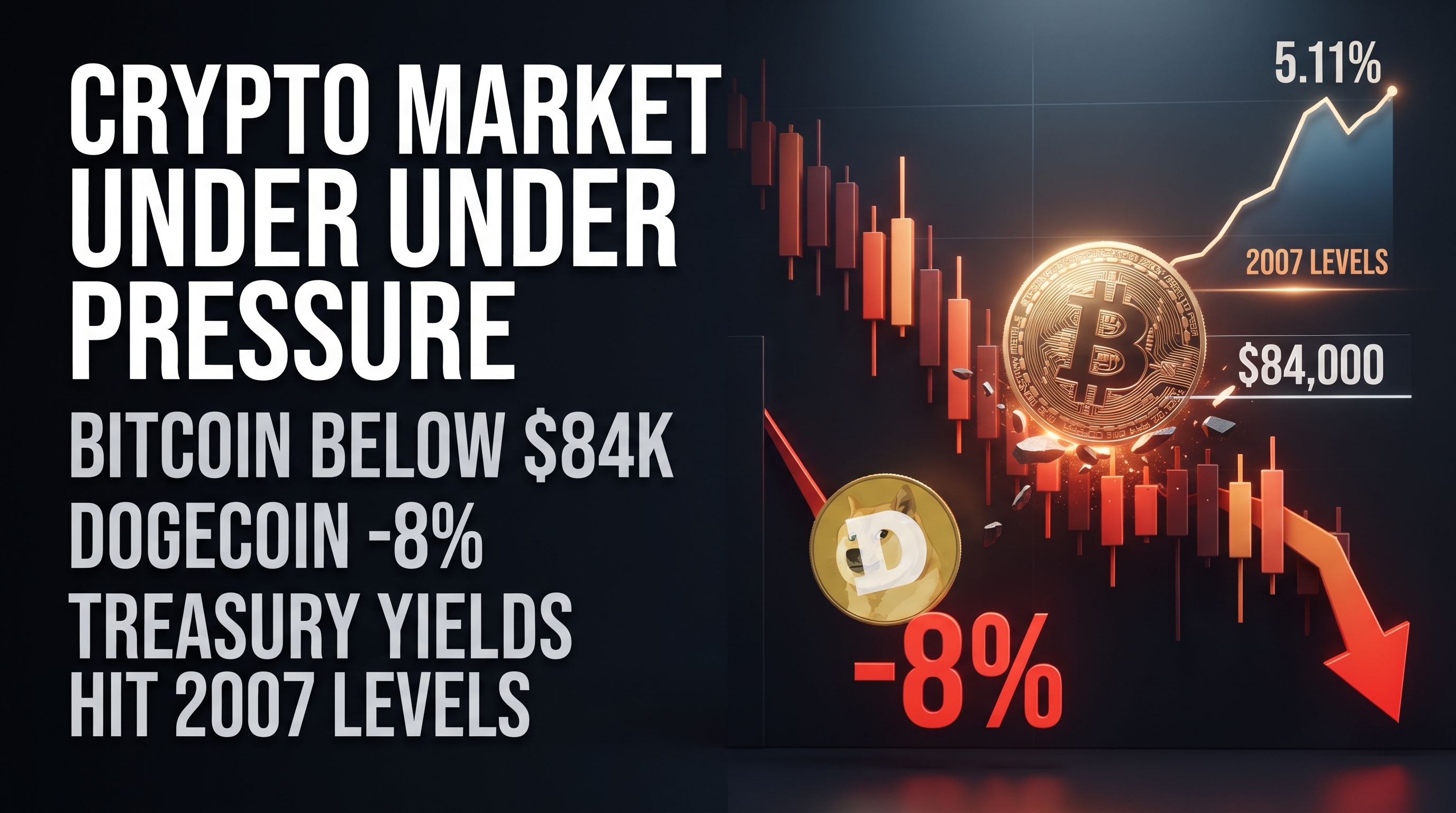
The cryptocurrency market came under renewed selling pressure as rising U.S. Treasury yields weighed on risk assets.
Bitcoin fell below $84,000, while Dogecoin dropped around 8%, leading losses among major cryptocurrencies. The move came as the 10-year U.S. Treasury yield climbed above 5%, reaching its highest level since 2007.
The combination of stronger-than-expected U.S. economic data, higher oil prices and rising bond yields created a difficult environment for Bitcoin and other cryptocurrencies.
Bitcoin Falls Back Below $84,000
Bitcoin had recently pushed toward the $87,000 area, but the rally lost momentum as Treasury yields moved sharply higher.
BTC traded around $83,900, down more than 2% over 24 hours in the latest market data. Earlier in the move, Bitcoin had reached nearly $87,300 before sellers returned.
The decline shows how quickly the crypto market can react when macroeconomic conditions change.
Bitcoin does not generate traditional interest income, so when government bonds offer significantly higher yields, investors may demand a greater return from riskier assets before allocating capital to them.
Dogecoin Leads the Crypto Sell-Off
Dogecoin was among the hardest-hit major cryptocurrencies.
DOGE fell roughly 7% to 8%, trading just above the $0.09 level during the sell-off. Other major tokens also moved lower, including XRP, Zcash and Hyperliquid, while Ethereum, Solana and BNB posted smaller declines.
Dogecoin's larger decline highlights the higher volatility often seen in meme-based cryptocurrencies.
When market sentiment weakens, speculative assets can experience larger moves than Bitcoin because traders tend to reduce exposure to higher-risk positions first.
Treasury Yields Reach Two-Decade Highs
One of the biggest drivers behind the market move was the sharp increase in U.S. Treasury yields.
The 10-year Treasury yield reached around 5.11%, its highest level since 2007. The move came as investors reacted to stronger economic data, higher oil prices and expectations that inflation could remain difficult to control.
The rise in yields is important for crypto because Treasury securities are widely considered a benchmark for global borrowing costs.
When yields rise, the cost of financing increases across financial markets. This can reduce the appeal of highly leveraged positions and assets that do not provide a regular yield.
Strong U.S. Economic Data Adds Pressure
The latest move was not driven by Treasury markets alone.
S&P Global's flash survey showed U.S. business activity expanding at its fastest pace in more than five years. The composite index reached 58.4, its strongest reading since July 2021.
At the same time, Brent crude oil prices climbed more than 4% to nearly $104 per barrel after a six-session decline.
Higher oil prices can add to inflation concerns because energy costs influence transportation, manufacturing and other parts of the economy.
That combination — stronger economic activity and higher energy prices — can make investors more cautious about the path of interest rates.
Weak Treasury Auction Adds to Yield Pressure
Another factor was demand for newly issued U.S. government debt.
The Treasury sold $70 billion of five-year notes, but the auction attracted weaker demand than expected. The notes cleared at a 5.033% yield, the highest auction yield since 2006.
The result suggested buyers wanted additional compensation for holding the debt.
When Treasury yields rise quickly, financial conditions can tighten even without an immediate change in central-bank policy. That can affect stocks, crypto and other risk-sensitive assets.
Why Rising Yields Matter for Bitcoin
Bitcoin's reaction to higher Treasury yields is largely connected to opportunity cost and liquidity.
If a government bond offers a substantially higher yield, investors may become less willing to hold assets that do not produce traditional income.
Higher yields can also make borrowing more expensive. That matters for leveraged crypto traders because higher financing costs can encourage traders to reduce positions.
This does not mean rising Treasury yields automatically cause Bitcoin to fall every time. Crypto prices are influenced by many factors, including ETF flows, liquidity, institutional demand, regulation and market positioning.
But the latest move shows that macroeconomic conditions remain an important part of the Bitcoin market.
Options Expiration Adds Another Source of Volatility
The market is also approaching a large crypto options expiration.
According to CoinDesk, roughly $14 billion in options were scheduled to expire on Deribit on Friday, creating another potential source of short-term price volatility. Bitcoin was also trading below the $85,000 strike level highlighted by market participants.
Large options expirations can influence short-term trading because market makers and traders may adjust their positions as contracts approach settlement.
That does not determine the direction of Bitcoin by itself, but it can contribute to sharper price movements when combined with already-weak market sentiment.
What Happens Next for Crypto?
The market is now watching several factors closely.
The direction of U.S. Treasury yields will remain important, particularly if the 10-year yield continues to hold above 5%.
Traders will also be watching oil prices, inflation data, Federal Reserve policy expectations and institutional flows into crypto investment products.
Bitcoin's ability to stabilize above key price levels could also influence sentiment across the broader market.
For Dogecoin and other higher-volatility cryptocurrencies, the reaction could be even stronger if investors continue reducing exposure to speculative assets.
What This Means for Solana and Web3 Builders
Market volatility does not stop blockchain development.
Even when crypto prices move lower, developers continue building decentralized applications, tokens, NFTs and financial infrastructure.
For builders who want to launch projects on Solana, the underlying network continues to evolve. Solana is also testing its Alpenglow upgrade, which targets dramatically faster transaction finality.
This broader infrastructure development could become increasingly important as Web3 applications move beyond speculation toward payments, tokenized assets and practical on-chain services.
Create Your Solana Token With Solsmint
For Web3 creators who want to turn an idea into an actual Solana token, Solsmint offers a simple token creation platform.
Users can create a Solana token for 0.05 SOL and access tools for minting, burning and airdrops. Liquidity can also be added directly to Raydium, while NFT creation is available with 0 platform fees.
As the crypto market continues to develop, easy-to-use infrastructure can help more creators experiment with new token and Web3 ideas without building every component from scratch.
Final Thoughts
The latest crypto sell-off shows how closely digital assets remain connected to broader financial markets.
Bitcoin falling below $84,000 and Dogecoin losing around 8% came as Treasury yields surged, with the 10-year yield moving above 5% and reaching levels not seen since 2007.
Higher oil prices, strong U.S. business activity and weak demand at a five-year Treasury auction added to concerns about borrowing costs and future monetary policy.
For crypto traders and investors, the key factors to watch now are Treasury yields, inflation expectations, Federal Reserve policy, Bitcoin's price structure and liquidity conditions.
The short-term market may remain sensitive to macroeconomic developments, but the continued development of blockchain infrastructure shows that the long-term evolution of Web3 is happening beyond daily price movements.
About admin
Crypto enthusiast and blockchain analyst with expertise in the Solana ecosystem. Passionate about educating others on the potential of decentralized technologies and DeFi innovations.